Executive Summary
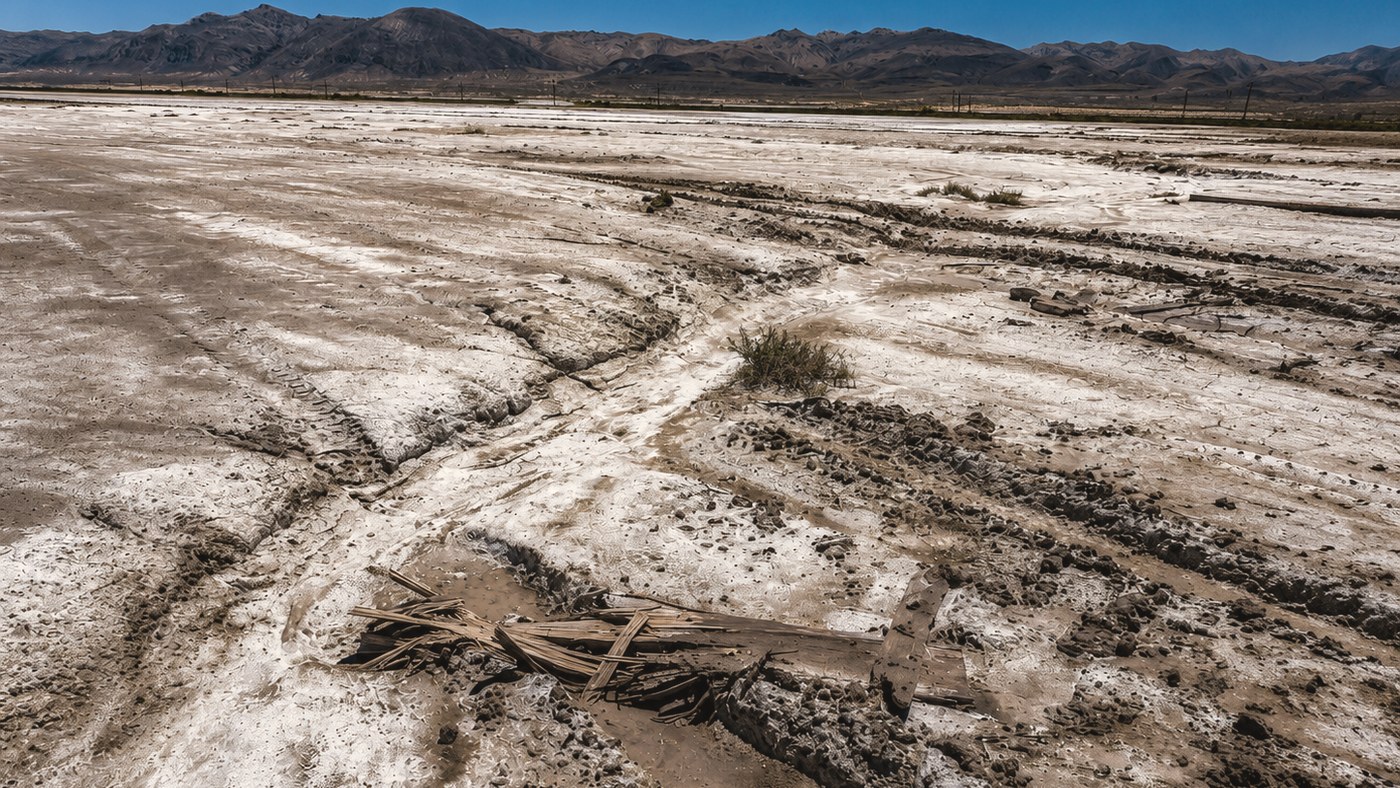
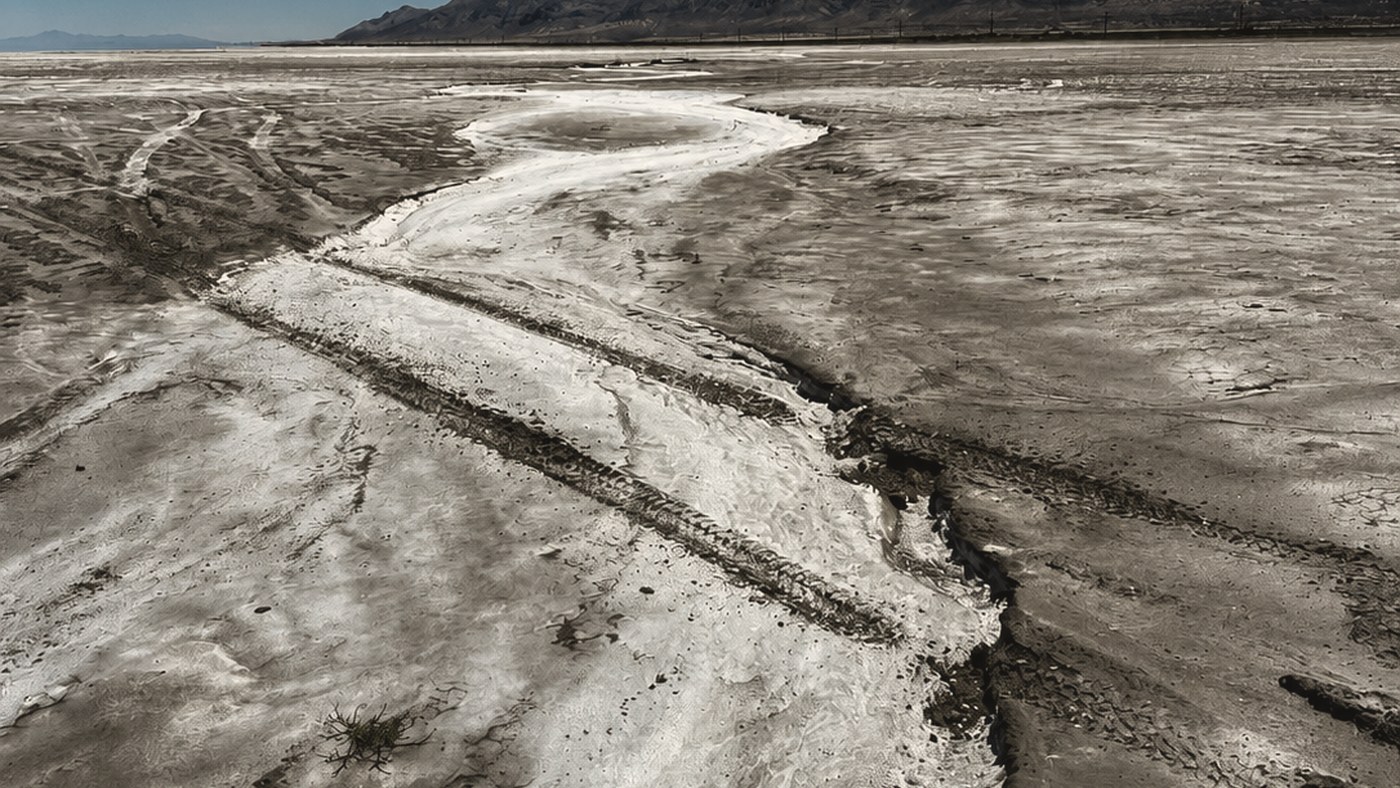
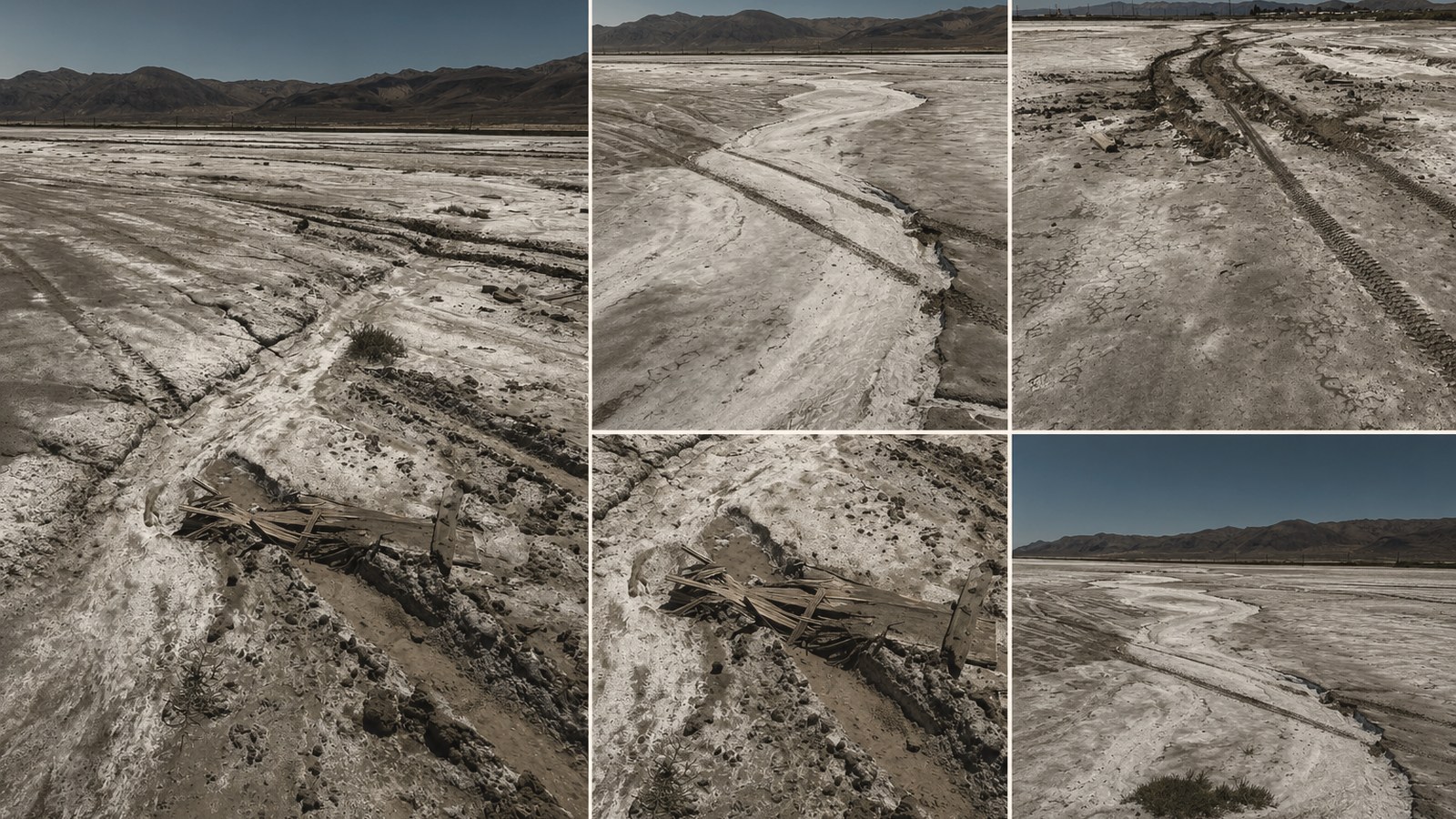
During a routine inspection of a suspected Desert Ghost Salmon migration corridor, Bureau personnel documented extensive vehicle tracks crossing and following the dry river channel.
The disturbance included compacted sediment, displaced surface material, repeated tire impressions, and areas where the natural structure of the channel appeared to have been churned or flattened.
No salmon were directly observed during the inspection. This does not establish that salmon were absent. It establishes only that no salmon were available for comment.
Field Observations
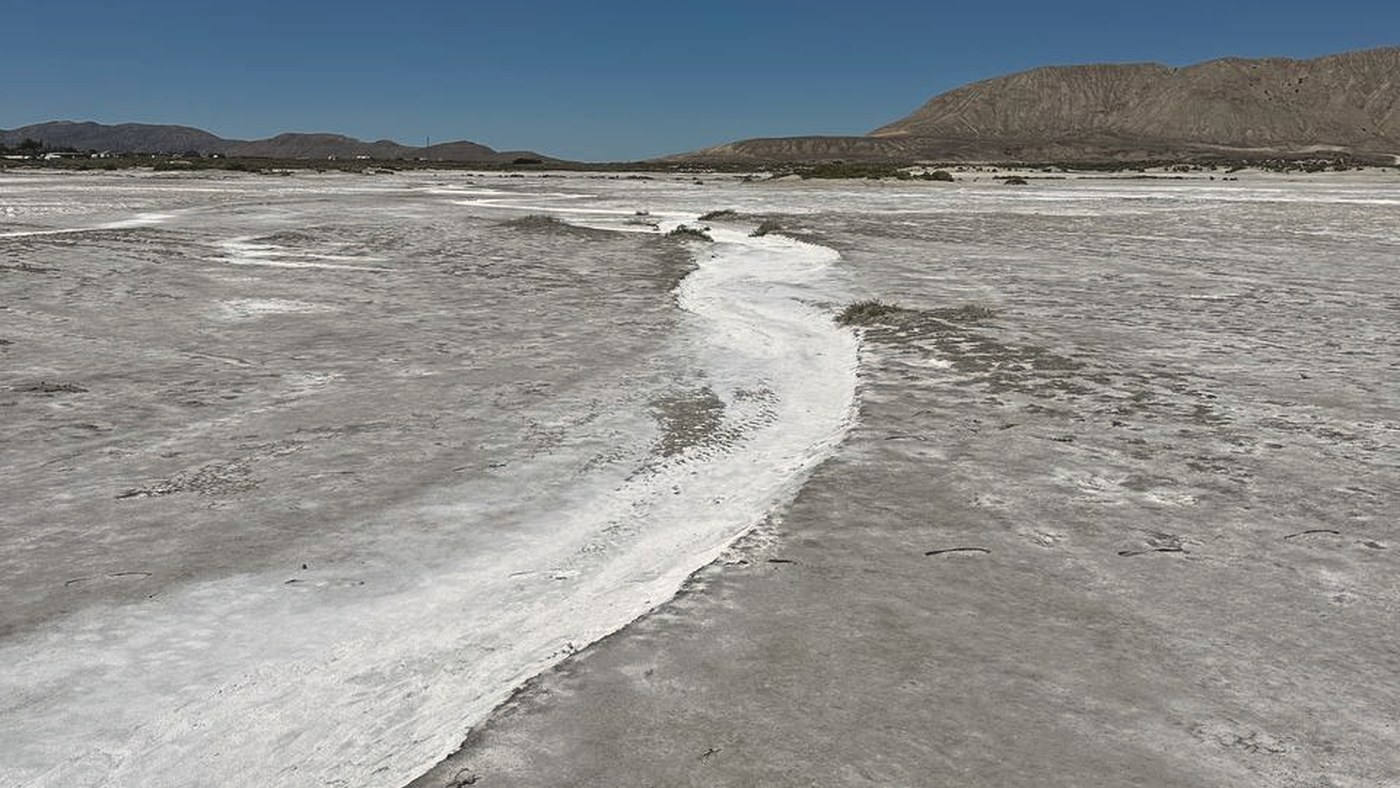
Vehicle tracks were visible both across the channel and along sections of the probable riverbed. In several locations, tires appeared to have cut through the surface crust and disturbed the finer material beneath.
Although the river was dry at the time of inspection, the channel remains operational as a migration route, spawning landscape, hydrological memory, and protected zone of administrative concern.
Dry conditions should not be interpreted as permission to convert a river into a road.
Preliminary Assessment
The Bureau cannot yet determine the full ecological impact of the disturbance. Possible effects include damage to riverbed structure, interruption of migration cues, increased habitat fragmentation, and stress to salmon whose existence already requires unusual levels of concentration.
The incident has therefore been classified as a probable vehicle disturbance pending further analysis, witness testimony, and the eventual cooperation of affected fish.